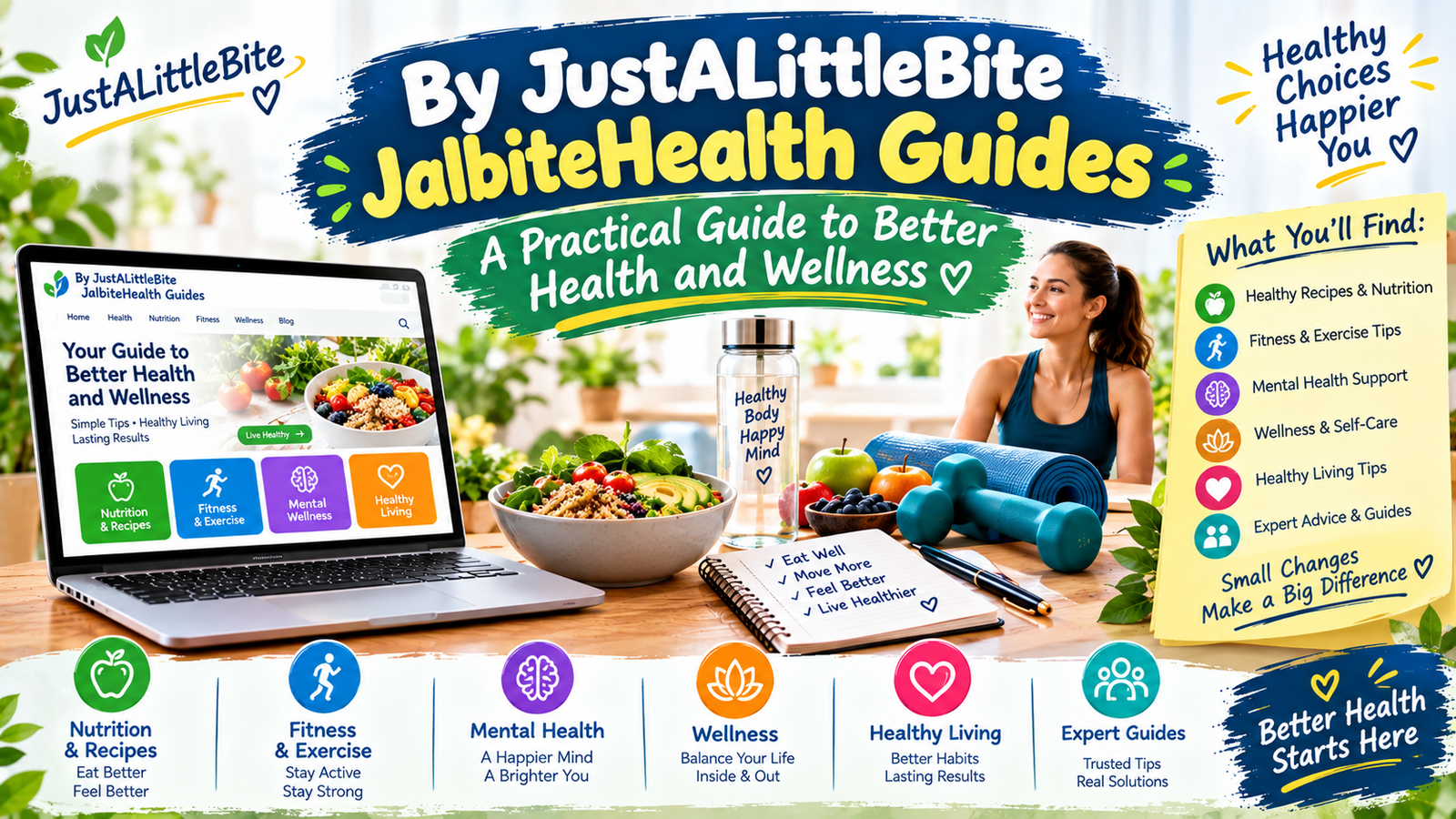
Taking care of your health does not always require complicated routines or major lifestyle changes. Often, small and consistent choices can make a meaningful difference. By JustALittleBite JalbiteHealth Guides offers a useful way to think about everyday health through practical information, simple habits, nutrition awareness, and sustainable wellness strategies.
Whether you are interested in improving your diet, becoming more active, managing daily stress, or simply learning more about healthy living, a good health guide should make information easy to understand and apply. The goal is not perfection but progress. By focusing on realistic changes, people can develop healthier routines that fit naturally into their everyday lives.
List of Topics Covered in JalbiteHealth Guides
A comprehensive health and wellness guide can cover many areas of everyday life. Some of the most useful topics include:
- Healthy eating and balanced nutrition
- Portion control and mindful eating
- Regular physical activity
- Sleep and rest
- Stress management
- Hydration
- Healthy lifestyle habits
- Preventive health awareness
- Sustainable weight management
- Building long-term wellness routines
These areas are connected. Improving one part of your lifestyle can often make other healthy habits easier to maintain.
Understanding Healthy Eating
Nutrition is one of the most important foundations of good health. A balanced diet provides the body with the energy and nutrients it needs to function properly. Instead of focusing on restrictive diets, a practical approach is to include a variety of nutritious foods.
Fruits and vegetables provide important vitamins, minerals, fiber, and other beneficial compounds. Whole grains can provide sustained energy and fiber, while protein-rich foods support muscles and other body functions. Healthy fats, when included in appropriate amounts, are also an important part of a balanced eating pattern.
The idea behind practical nutrition is simple: choose nourishing foods regularly while allowing room for flexibility. Healthy eating does not mean that every meal has to be perfect.
The Importance of Portion Awareness
What you eat matters, but how much you eat also plays an important role. Portion awareness can help people better understand their food intake without requiring complicated calculations.
One useful strategy is to eat slowly and pay attention to hunger and fullness signals. Using reasonable serving sizes and avoiding distracted eating can also make it easier to recognize when you have had enough.
Rather than eliminating favorite foods, moderation can make a healthy eating pattern more sustainable. This approach can reduce the feeling that healthy living requires constant restriction.
Staying Physically Active
Movement is another essential component of overall wellness. Physical activity does not have to mean spending hours in a gym. Walking, cycling, stretching, dancing, swimming, household activities, and recreational sports can all contribute to an active lifestyle.
For people who are not currently active, starting gradually can be more realistic than attempting an intense exercise program immediately. Even short periods of movement throughout the day can help create a more active routine.
The most effective activity is often the one you enjoy and can continue consistently.
Sleep and Recovery
Health is not only about food and exercise. Sleep is equally important because the body needs adequate rest and recovery.
Creating a consistent sleep schedule can help establish healthier sleep habits. A relaxing bedtime routine, a comfortable sleeping environment, and reducing stimulating activities before bed may also support better rest.
People who regularly experience significant sleep difficulties should consider discussing them with a qualified healthcare professional, particularly when poor sleep affects daily activities.
Managing Everyday Stress
Stress is a normal part of life, but ongoing stress can affect overall well-being. Learning healthy ways to manage stress is therefore an important part of any wellness plan.
Simple techniques can include taking short breaks, practicing deep breathing, spending time outdoors, maintaining social connections, writing in a journal, or engaging in enjoyable hobbies.
There is no single stress-management method that works for everyone. Experimenting with different healthy strategies can help individuals discover what works best for their circumstances.
Staying Hydrated
Water plays an important role in normal body functions. Individual fluid needs can vary depending on factors such as activity level, weather, diet, and overall health.
Keeping water available throughout the day can make hydration easier. Some people also enjoy adding naturally flavored foods such as lemon, cucumber, or fruit to water.
It is important to remember that hydration needs are individual. Certain medical conditions can require specific fluid recommendations, so people with health concerns should follow advice from their healthcare professional.
Building Sustainable Habits
One of the most valuable lessons from practical wellness guidance is that consistency is generally more useful than extreme short-term efforts.
Instead of trying to change everything at once, choose one or two manageable habits. For example, someone might begin by adding vegetables to one meal each day or taking a short walk after dinner. Once that habit becomes comfortable, another goal can be introduced.
Small improvements can eventually become part of a person’s normal routine. This makes healthy living feel less like a temporary challenge and more like a long-term lifestyle.
Preventive Health Matters
Wellness also involves paying attention to preventive healthcare. Regular checkups, recommended screenings, vaccinations, dental care, and conversations with healthcare professionals can help people stay informed about their health.
Lifestyle guides can provide general education, but they should not replace personalized medical advice. Symptoms, medications, medical conditions, and individual circumstances can significantly affect what is appropriate for a particular person.
When something feels unusual or concerning, seeking professional medical advice is the safest approach.
Creating Your Personal Wellness Plan
A useful health plan should reflect your individual lifestyle, preferences, and goals. Start by identifying what you want to improve. Your goal might be eating more nutritious meals, becoming more active, sleeping better, or managing stress.
Next, choose realistic actions. A goal such as “be healthier” is difficult to measure, while “walk for 20 minutes three times a week” provides a clearer starting point.
Track your progress without becoming overly focused on perfection. Missed days happen. The important thing is to return to your routine and continue moving forward.
Final Thoughts on By JustALittleBite JalbiteHealth Guides
By JustALittleBite JalbiteHealth guides can be viewed as a practical approach to understanding everyday wellness. The central idea is that healthier living can be built through simple, manageable choices involving nutrition, movement, sleep, hydration, stress management, and preventive care.
The best health routine is not necessarily the most complicated one. It is the routine that you can realistically maintain over time. By making small changes, learning about your body’s needs, and seeking professional guidance when necessary, you can create a balanced approach to long-term well-being.
Remember that health is personal, and there is no universal solution. Use general wellness information as a starting point, listen to your body, and consult qualified healthcare professionals for personalized medical guidance.